
Witness: Cassie Ventura
'Victim-1,' Bad Boy Records artist, and romantic partner
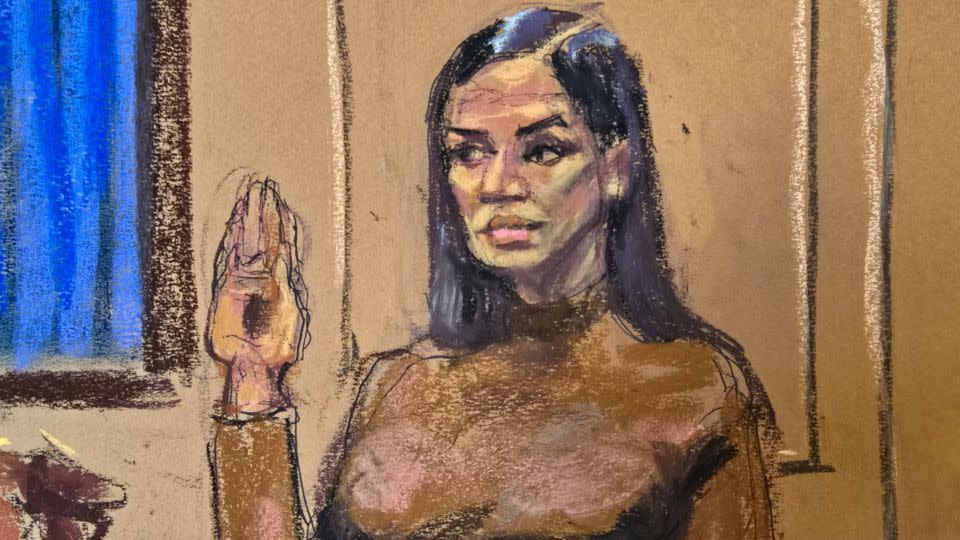
Date(s): May 13 - 16, 2025
Witness for: Prosecution
Testimony
Cassie Ventura’s Testimony in Sean 'Diddy' Combs’ Sex Trafficking and Racketeering Trial: Days 2-5 Highlights From May 13 to May 16, 2025, during Days 2 through 5 of Sean 'Diddy' Combs’ federal sex trafficking and racketeering trial in Manhattan, Casandra 'Cassie' Ventura, a former girlfriend of Combs, testified at the Daniel Patrick Moynihan U.S. Courthouse in New York. Ventura, a key prosecution witness, provided an emotionally charged and detailed account of her 11-year relationship with Combs, spanning 2007 to 2018, alleging years of physical abuse, sexual coercion, and psychological control. Her testimony aimed to support the prosecution’s claim that Combs ran a criminal enterprise involving sex trafficking and coercion, particularly through drug-fueled 'freak-offs.' Background and Role in the Trial Casandra Ventura, a 38-year-old R&B singer known as Cassie, was the star witness in Combs’ trial on charges of racketeering conspiracy, sex trafficking, and transportation to engage in prostitution. Ventura, who is eight-and-a-half months pregnant with her third child, had a decade-long, on-and-off relationship with Combs, beginning in 2007 when she signed a 10-album deal with his Bad Boy Records label at age 19. Combs, 17 years her senior, pursued her romantically shortly after. Ventura’s 2023 civil lawsuit against Combs, settled for $20 million, accused him of rape, sex trafficking, and abuse, prompting the federal investigation that led to his September 2024 arrest. Her testimony followed opening statements and preceded that of Special Agent Yasin Binda and singer Dawn Richard, aiming to establish a pattern of coercion and violence central to the prosecution’s case. Key Points of Cassie Ventura’s Testimony 1. Introduction to 'Freak-Offs' and Coercion Ventura began her testimony on May 13, describing the 'freak-offs' as drug-fueled, orchestrated sexual encounters involving male escorts, which Combs directed and often filmed. She told the jury these sessions, lasting from 36 hours to four days, occurred nearly weekly at times, in cities like New York, Miami, Los Angeles, and internationally in places like Ibiza. Ventura said she was tasked with hiring escorts through platforms like Craigslist, Backpage, and later Cowboys 4 Angels, paying them $1,500 to $6,000 in cash. The encounters involved drugs like ecstasy, cocaine, ketamine, and MDMA, which she alleged Combs used to impair her consent. Ventura testified that she felt 'humiliated' and 'disgusting,' participating out of fear and a desire to please Combs, who controlled her career, finances, and personal life, including paying for her apartment, travel, and clothing. 2. Physical Abuse and Control On May 14, Ventura detailed the physical abuse she allegedly endured, describing frequent violence that began within the first year of their relationship. She recounted a 2009 incident where, after speaking with a producer at a party, Combs called her a crude name, and when she punched him in retaliation, he stomped on her face in the car, leaving her unrecognizable. She testified about a 2016 assault captured on hotel surveillance video, shown to the jury, where Combs threw a vase at her in a Los Angeles hotel corridor, yelling that she couldn’t leave him. Ventura also described a 2013 incident at her apartment where Combs attempted to attack her, and another where he pursued rival Suge Knight with a gun, forcing her to carry it, which 'terrified' her. She told the court Combs controlled her appearance—dictating her clothing, hair, and nails—and would withhold support if she disobeyed, often taking her phone or laptop as punishment. 3. Alleged Rape and Blackmail Ventura’s testimony on May 14 included a harrowing account of an alleged 2018 rape after their breakup. She described a 'closure conversation' dinner in Malibu, after which Combs came to her home and raped her on the living room floor. 'I remember crying and saying no,' she said, noting his 'black eyes' and altered demeanor. She also testified that Combs blackmailed her with 'freak-off' videos, threatening to release them to damage her career, making her feel like she’d be portrayed as a 'slut.' Ventura said this coercion kept her compliant, as she feared the consequences of refusal, including further violence or career sabotage. She admitted to consensual sex with Combs once after the alleged rape, explaining, 'We’d been together 10 years; you just don’t turn feelings off that way.' 4. Emotional Toll and Suicide Attempt On May 14, Ventura revealed the profound emotional impact of the alleged abuse, testifying that she considered suicide in 2023 due to traumatic flashbacks. She told the jury she planned to walk into traffic, but her husband, Alex Fine, stopped her, and she sought therapy. Ventura broke down several times on the stand, particularly when discussing the shame and guilt she carried, stating on May 15, 'I can’t carry this anymore, the shame, the guilt.' She described the 'freak-offs' as a 'job' that left her feeling worthless, exacerbated by Combs’ control over her career, which stalled after releasing only one album of her 10-album deal. 5. Cross-Examination by the Defense The defense began cross-examination on May 15, continuing through May 16, with attorney Anna Estevao focusing on Ventura’s credibility and motives. They presented text messages from 2009-2012, including one where Ventura declined a 'freak-off' but suggested doing it 'for the first time for the rest of our lives,' aiming to show her willingness. Estevao questioned Ventura about canceling a music tour after receiving the $20 million settlement, suggesting financial motives, which Ventura denied, smiling as she clarified, 'That wasn’t the reason why.' The defense also asked about her feelings toward Combs, to which she replied, 'I don’t hate him,' and confirmed Fine knew about both the alleged rape and her later consensual encounter with Combs. Estevao’s approach was cautious, mindful of Ventura’s pregnancy, but aimed to portray the relationship as mutually invested and consensual, challenging the prosecution’s coercion narrative. Legal and Trial Context Ventura’s testimony followed opening statements where the defense acknowledged Combs’ violence but argued it didn’t constitute sex trafficking or racketeering. The prosecution, led by Emily A. Johnson, used Ventura to establish Combs’ control over her life and career, supported by videos, texts, and photos of her injuries, including a swollen lip from the 2016 assault. Her testimony preceded Binda’s account of finding drugs, baby oil, and cash in Combs’ hotel room, corroborating Ventura’s descriptions of 'freak-off' supplies. Legal analysts on CNN noted Ventura’s testimony was credible and backed by evidence, but the defense’s focus on consensual elements aimed to weaken the federal charges. Implications and Next Steps Ventura’s four-day testimony provided a foundational narrative for the prosecution, detailing a pattern of coercion, violence, and blackmail that aligned with the racketeering and sex trafficking charges. Her emotional account, including the suicide attempt and rape allegation, painted a damning picture of Combs’ alleged behavior. However, the defense’s cross-examination introduced doubts about her motives and the consensual nature of some encounters, a strategy likely to continue with upcoming witnesses like Kid Cudi and a male hotel employee. The jury will need to navigate these conflicting narratives to determine if Combs’ actions constituted a criminal enterprise.
Compiled from news sources and summarized with the help of AI.